- Export
- Order history (Export Orders) · CSV
- Find it in
- Account → History → Export Orders
- Plan
- Every plan, including Free
- Each file
- Up to 4 MB and 2,000 rows
- Steps checked
- 22 October 2026, against the official help pages
- How well it's tested
- Awaiting verification. See the record on the broker page
Export the file from Webull
Open your order history
In the Webull app, tap Account at the bottom, pick the account, then tap History. Newer versions call it Orders Records.
Export the orders
Tap the download icon at the top right (Export Orders), check the email address, and tap Submit.
Save the file from Webull's email
An email from noreply@webull.com arrives within 5 to 10 minutes with the CSV attached. Save the attachment. If options come as a second CSV, save that one too and import both. Don't open and save it again in a spreadsheet first: that can change the columns Leaf Edge reads.
We couldn't confirm this step's labels on Webull's own help pages. If your screen differs, tell us and we'll correct this guide.
Import it into Leaf Edge
Open Upload File in Leaf Edge
Sign in to Leaf Edge and open Sync in the top bar. Choose Upload File. File import works on every plan, including Free.
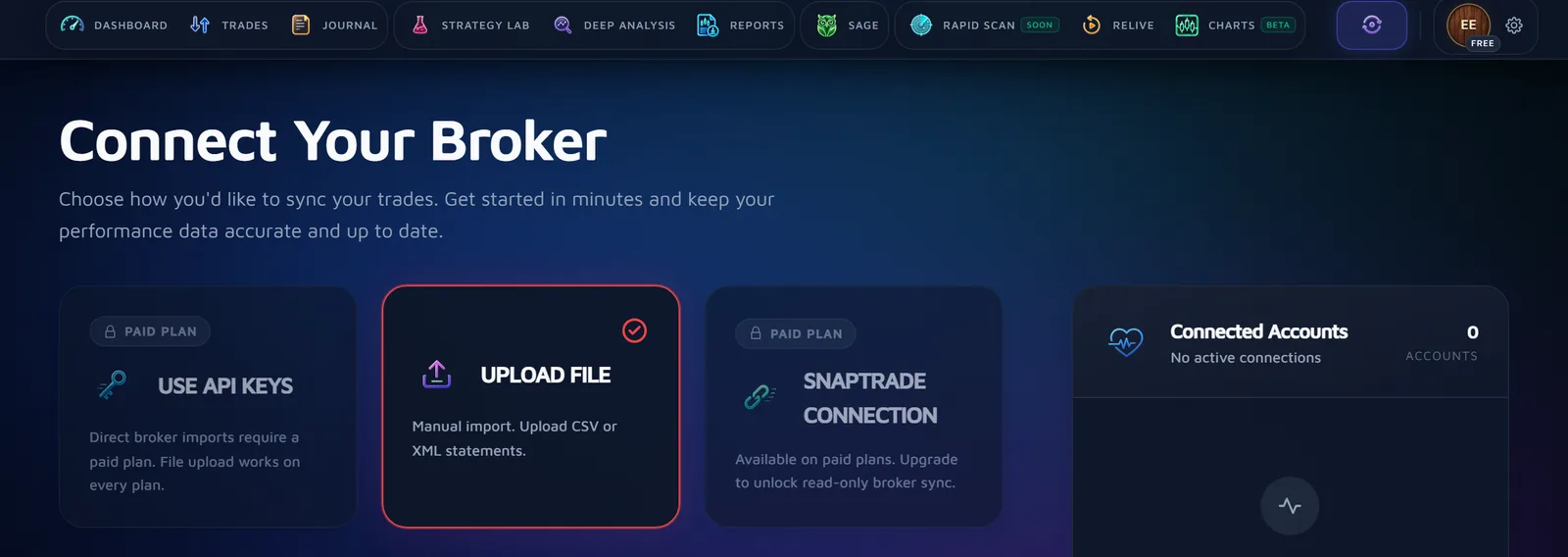
Drop the file in
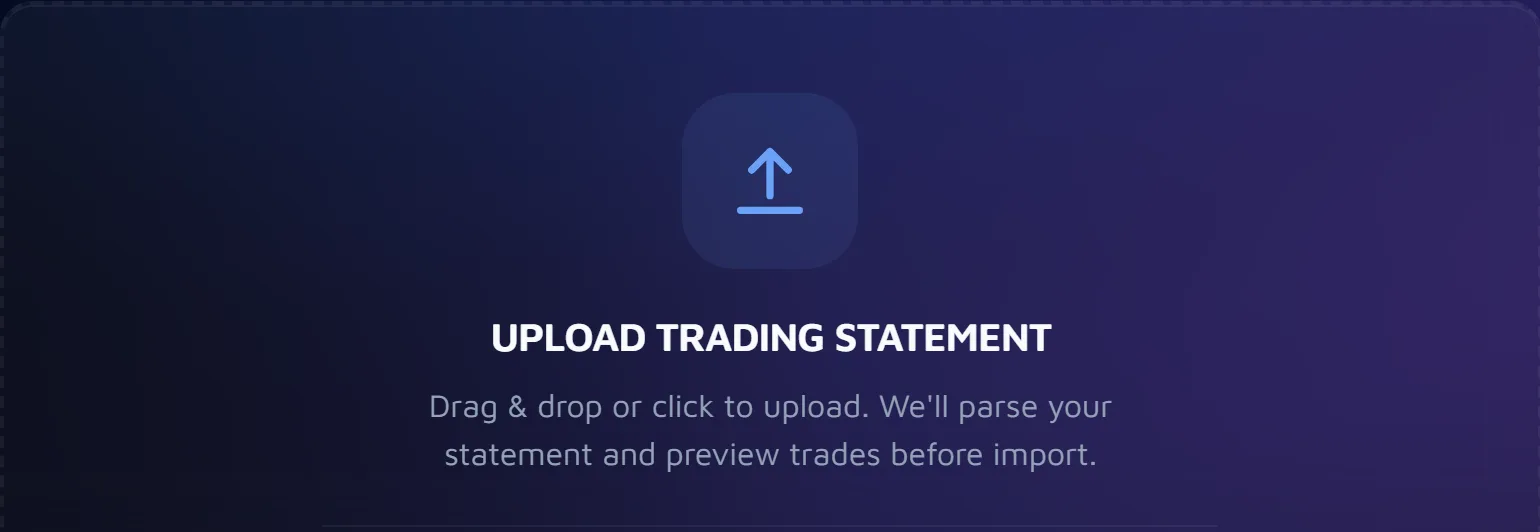
Drag the file onto Upload Trading Statement, or click the box to choose it. Leaf Edge recognises an export from Webull by what is inside it, so there is nothing to pick first. Each file can be up to 4 MB and 2,000 rows.
Check the preview
Nothing is saved yet. Review Import counts the rows as New, Unchanged, Corrections, Skipped and Rejected, and lists each row with its reason. Read every skipped and rejected row before you go on.
Webull's file lists every order, filled or not. Orders that never filled are listed as not filled and left out.
If the file holds trades in a currency your journal doesn't have yet, the preview says so. They keep their own currency, and your P&L is shown in the one currency you pick from the filter bar, converted at the European Central Bank's reference rate on the day each trade closed.
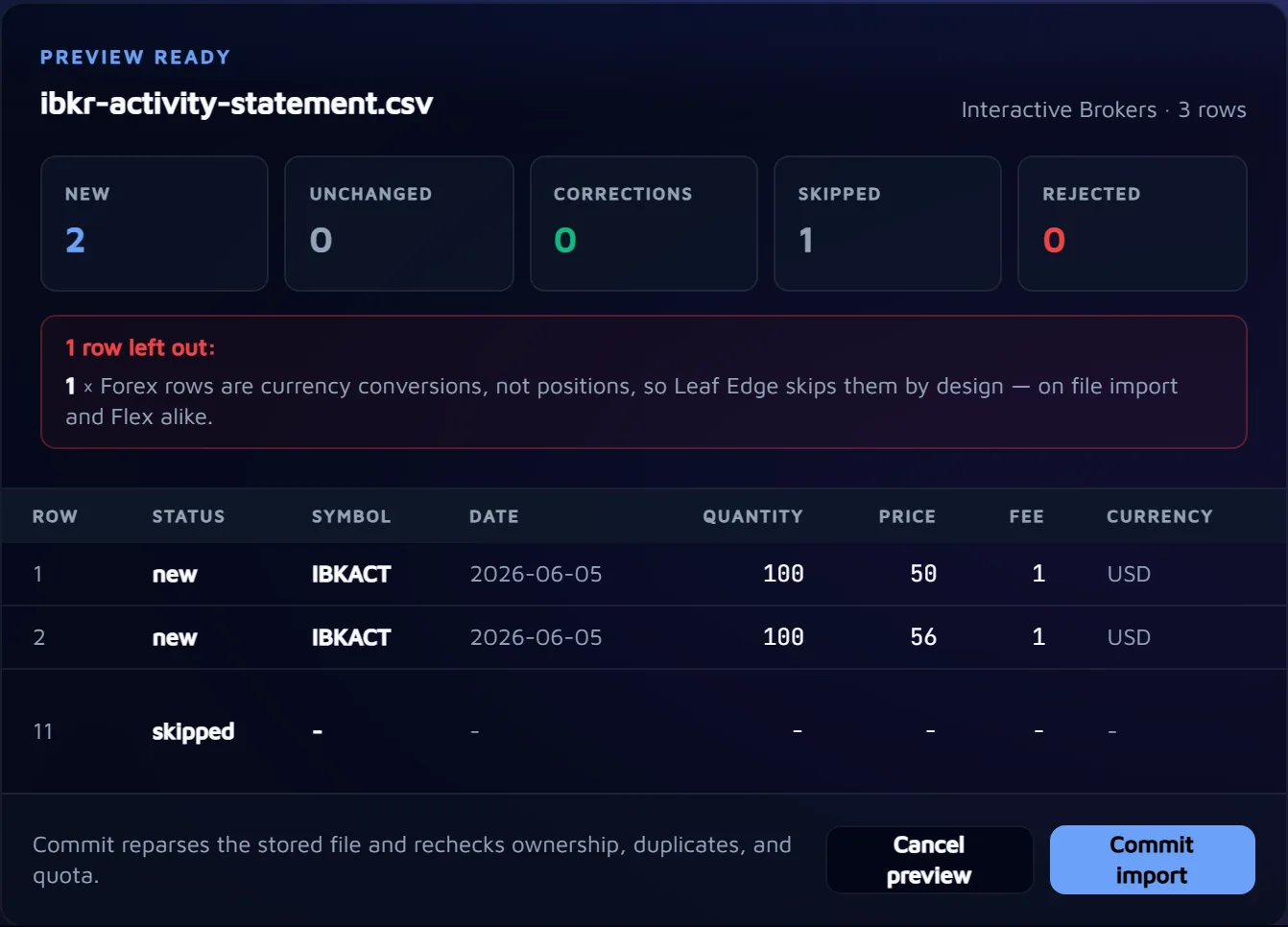
Commit the import
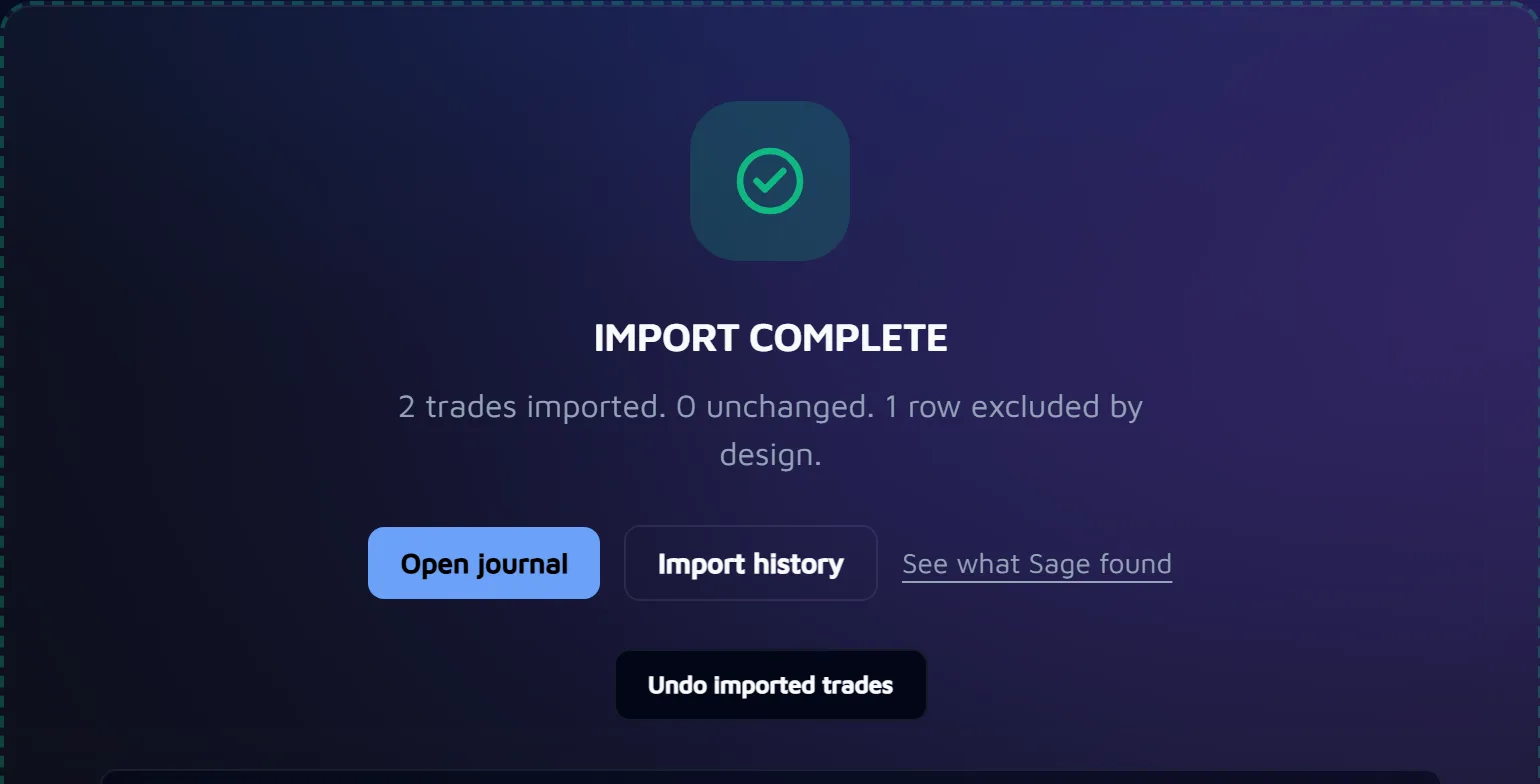
Press Commit import to save the trades, or Cancel preview to leave your journal as it was. Leaf Edge pairs the fills into round trips, so you will usually see fewer trades than the file has rows.
Changed your mind? Undo imported trades appears straight after an import, until your next upload and as long as you haven't started reviewing those trades.
On the Webull desktop app
Click Account in the left icon bar (under More if it's hidden). In the Orders panel, click the three-line icon at its top right, choose Export Orders and confirm the email address with Ok. The CSV arrives by email in the same way.
What comes in
- Filled orders in stocks and options, as fills.
- Fees come in as zero: Webull's order export has no fee column.
- The export has no fill ID, so two identical fills in the same second can't be told apart.
Other ways in from Webull
- Auto-sync, on Pro and Ultimate: a read-only connection through SnapTrade. On Free the broker picker shows it as Auto-sync · Pro. SnapTrade updates transactions once a day, a day behind, and brings no futures. See the SnapTrade guide.
Use one way in for each account. A file import and a SnapTrade connection for the same account can count the same trade twice.
Where these steps come from
These steps come from the official help pages, read on 22 October 2026. We haven't followed them on a real Webull account yet. Menus move from time to time; if yours doesn't match, these pages have the current path:
- Webull: How do I get a copy of my transaction history? (opens in a new tab)
- Webull: Order instructions and settings (opens in a new tab)
Sources read on 22 October 2026.
Next
Then review your first trade
Once your trades are in, each one has its own page: link it to a playbook or mark it as an honest skip, grade it, and note what you planned, what you did and what you learned. How a trade review works.