- Export
- History export · CSV
- Find it in
- ☰ → History → export
- Plan
- Every plan, including Free
- Each file
- Up to 4 MB and 2,000 rows
- Steps checked
- 22 October 2026, against the official help pages
- How well it's tested
- Awaiting verification. See the record on the broker page
Before you start
This guide is for Invest and Stocks ISA accounts. Leaf Edge can't import Trading 212 CFD accounts: a CFD export is refused with a message. Trading 212 has no trading export for Crypto accounts.
The importer is tested on synthetic files only: no real Invest or Stocks ISA export has been checked yet, so compare your first import with Trading 212's own figures.
Before you export
Currencies. A Trading 212 account in pounds gives you trades in pounds, and dollar trades from a second broker can join the same journal. Each trade keeps its own currency, and your P&L is shown in the one currency you pick from the filter bar, converted at the European Central Bank's reference rate on the day each trade closed.
Export the file from Trading 212
Switch to Invest or Stocks ISA
Open the Trading 212 app and switch to the Invest or Stocks ISA account you want to export.
We couldn't confirm this step's labels on Trading 212's own help pages. If your screen differs, tell us and we'll correct this guide.
Open History
Tap the menu icon ☰, then History.
Choose what to export
Tap the export button at the top right of History. Choose the timeframe and the data to include, keep Orders on, and confirm. Dividends and transactions are optional: Leaf Edge leaves those rows out.
We couldn't confirm this step's labels on Trading 212's own help pages. If your screen differs, tell us and we'll correct this guide.
Save the CSV
Trading 212 saves the CSV to your device. The file follows your account's number format, such as decimal commas. Don't open and save it again in a spreadsheet first: that can change the columns Leaf Edge reads.
Import it into Leaf Edge
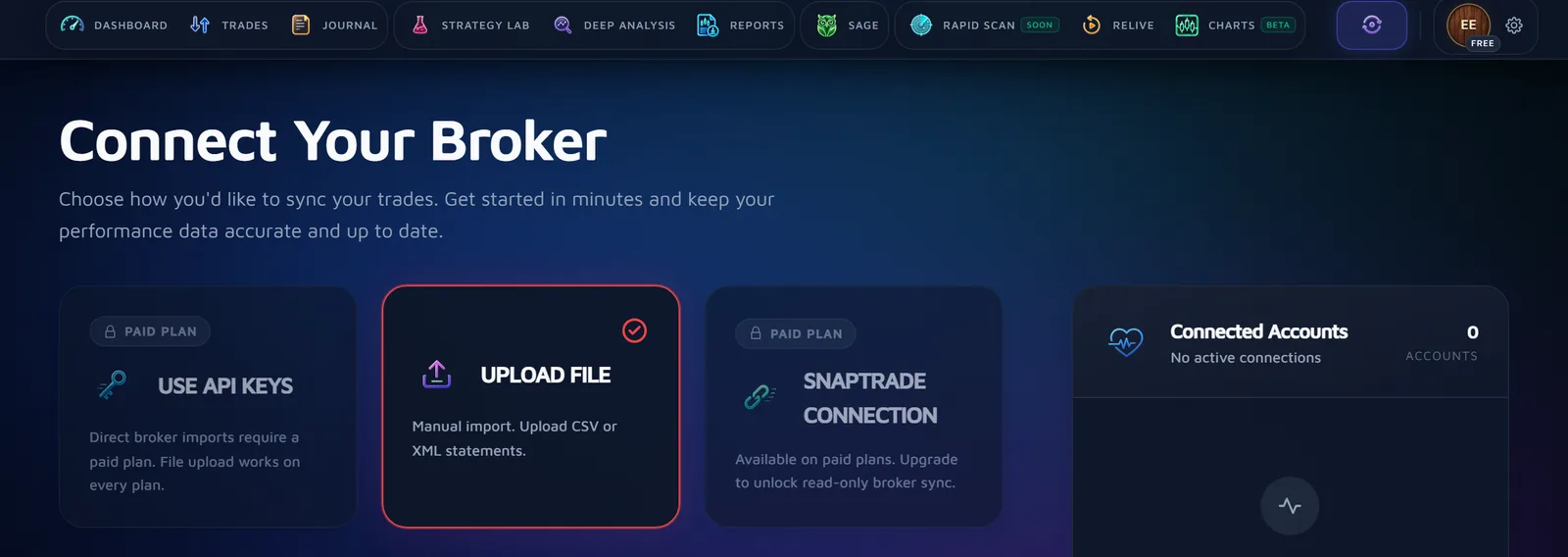
Open Upload File in Leaf Edge
Sign in to Leaf Edge and open Sync in the top bar. Choose Upload File. File import works on every plan, including Free.
Drop the file in
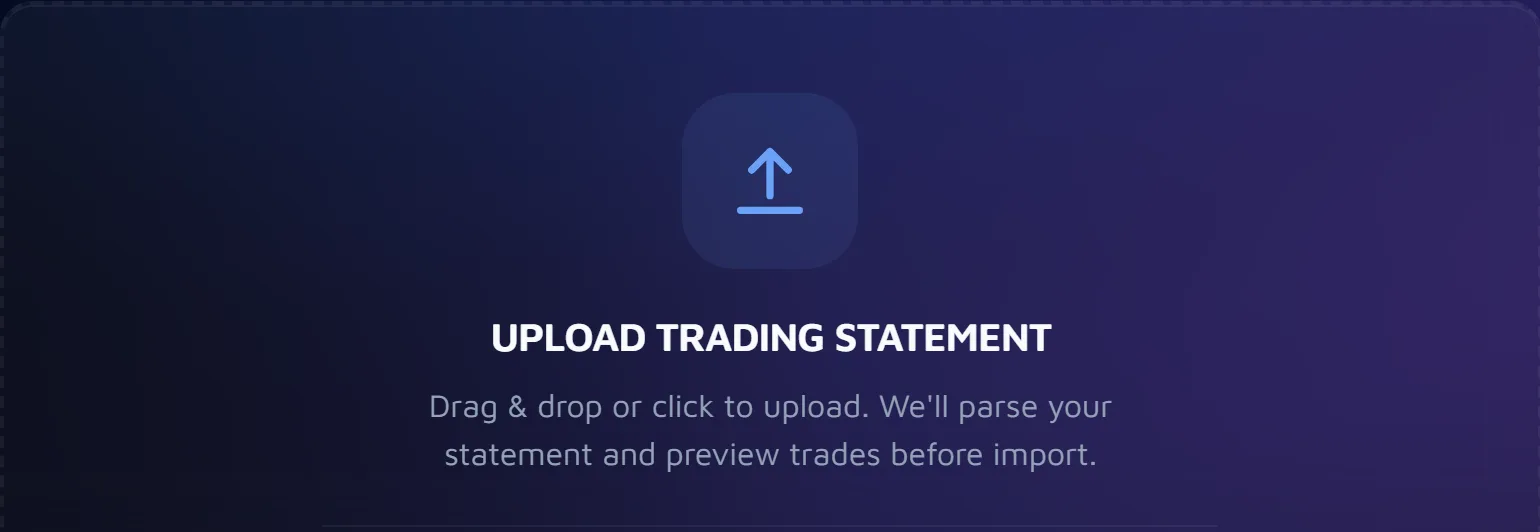
Drag the file onto Upload Trading Statement, or click the box to choose it. Leaf Edge recognises an export from Trading 212 by what is inside it, so there is nothing to pick first. Each file can be up to 4 MB and 2,000 rows.
Check the preview
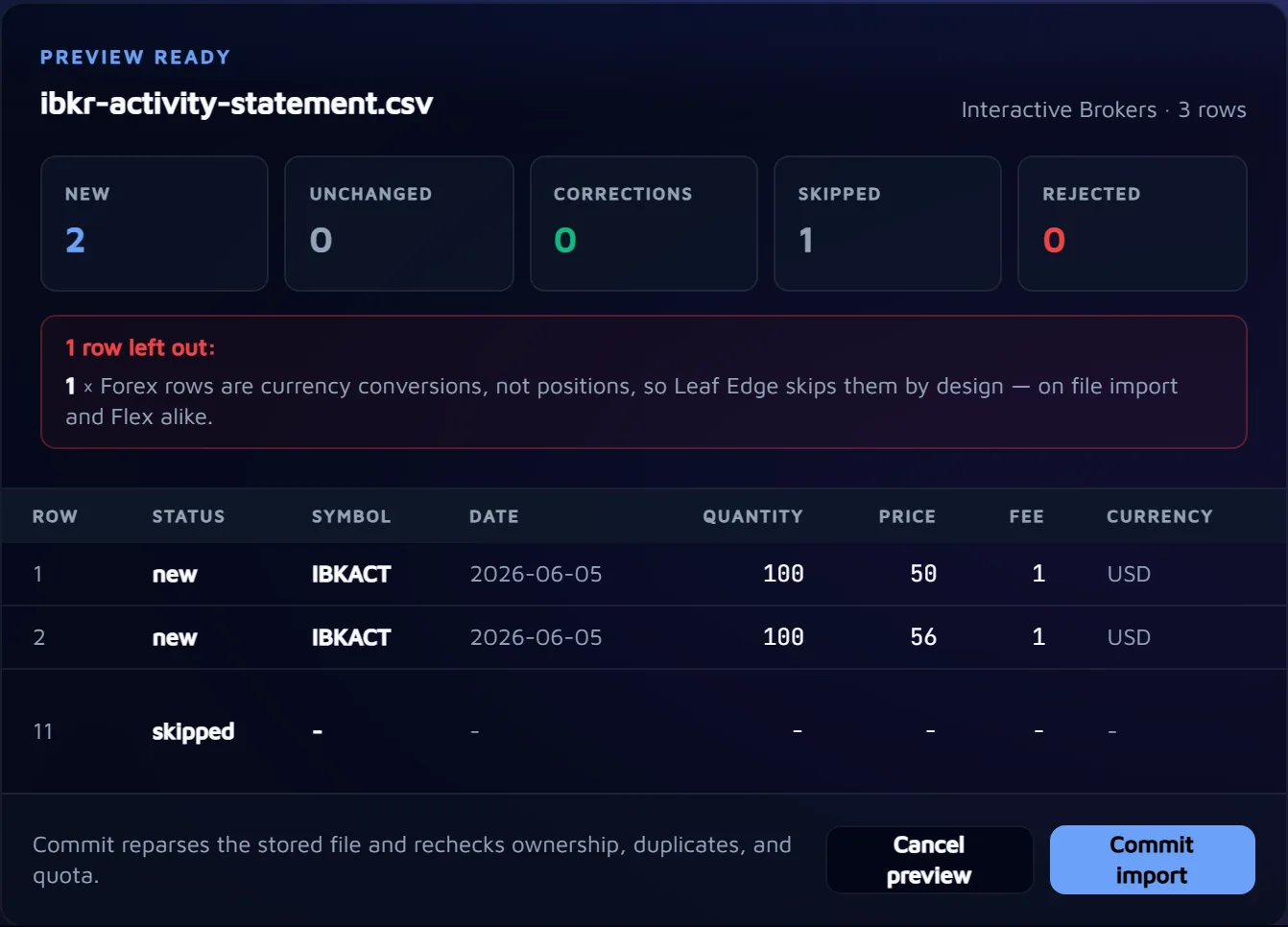
Nothing is saved yet. Review Import counts the rows as New, Unchanged, Corrections, Skipped and Rejected, and lists each row with its reason. Read every skipped and rejected row before you go on.
Dividends, deposits and other account activity in the file aren't trades, so Leaf Edge leaves them out.
If the file holds trades in a currency your journal doesn't have yet, the preview says so. They keep their own currency, and your P&L is shown in the one currency you pick from the filter bar, converted at the European Central Bank's reference rate on the day each trade closed.
Commit the import
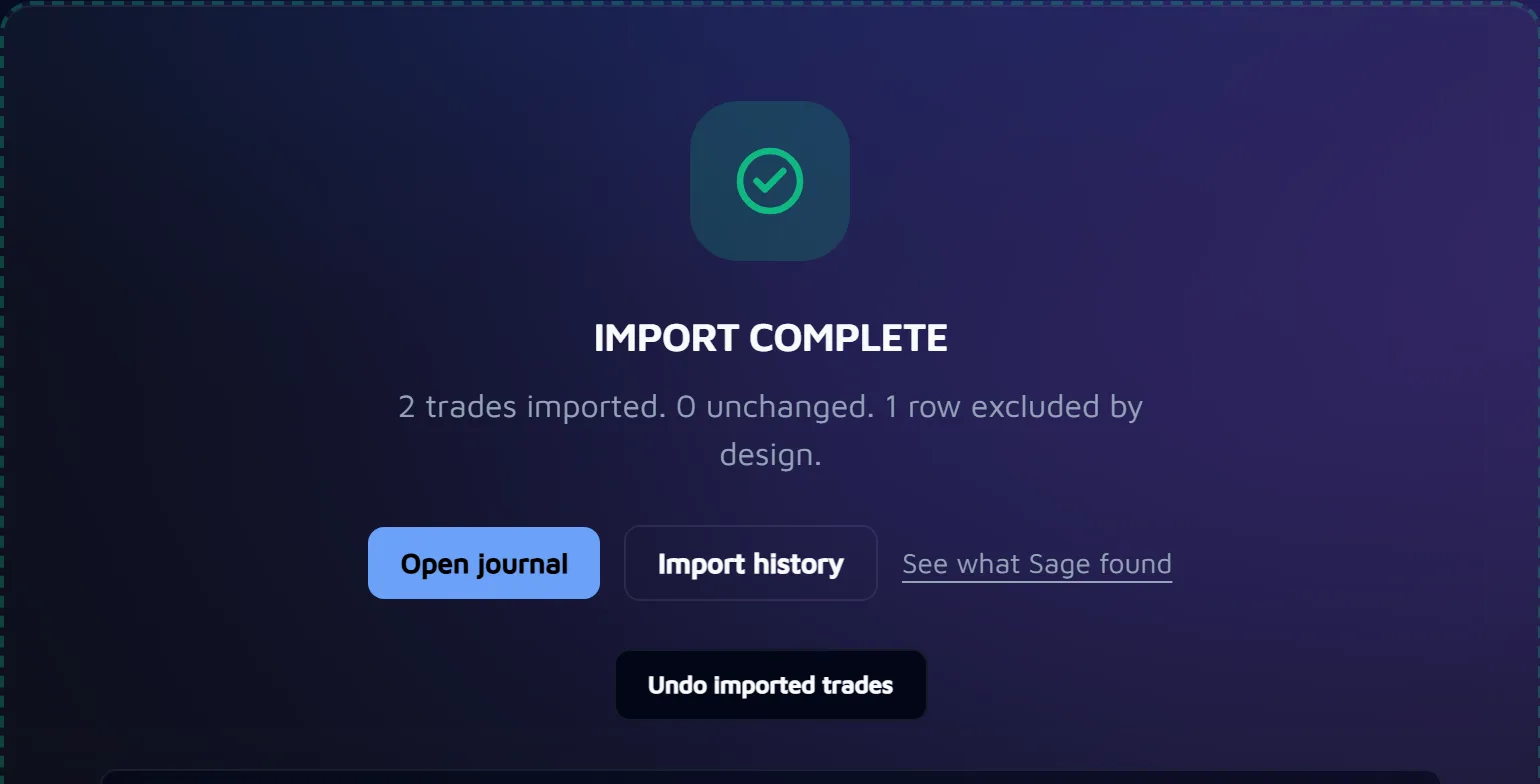
Press Commit import to save the trades, or Cancel preview to leave your journal as it was. Leaf Edge pairs the fills into round trips, so you will usually see fewer trades than the file has rows.
Changed your mind? Undo imported trades appears straight after an import, until your next upload and as long as you haven't started reviewing those trades.
History longer than one file
Trading 212 has limited each export to about a year. For a longer history, export one year at a time, without gaps, and import the files one by one, oldest first.
What comes in, and what to check
- Buys and sells of shares and ETFs in your Invest or Stocks ISA account, including fractional shares.
- Each account exports on its own, so an Invest account and a Stocks ISA are two files.
- A price in another currency is converted into your account currency with the exchange rate on its row. A row without a rate is refused rather than guessed. Prices quoted in pence are converted to pounds.
- Trading 212's charges on a trade, such as the currency conversion fee, stamp duty reserve tax and French transaction tax, count as its costs.
- Dividends, deposits, withdrawals and interest aren't trades, so they're left out.
- A closing sale needs its opening buy in what you import. A sale without one is flagged and gets no P&L until you import the older history.
Leaf Edge's market charts are a beta of delayed (T+1) history for US-listed stocks, priced in dollars. They can't show bars for shares listed in London or elsewhere in Europe, and fills converted into pounds or euros won't sit on a dollar chart's prices. See Charts for what the beta covers.
Other ways in from Trading 212
- SnapTrade: not offered. In our own test on 17 October 2026, a new Trading 212 connection through SnapTrade had brought in no trade history after 13 hours. Use file import for Trading 212.
- A direct API key: a connection with a read-only Trading 212 API key is built, but it's switched off for now, so the CSV export is the way in.
Common questions
- Is the Trading 212 import free?
- Yes. Importing a Trading 212 CSV works on every plan, including Free, and it doesn't use a broker connection.
- Can I import a Trading 212 CFD account?
- No. CFD accounts aren't supported on any route. Leaf Edge recognises a CFD export and refuses it with a message, rather than importing it wrong.
- Has Leaf Edge checked a real Trading 212 export?
- Not for Invest or Stocks ISA yet. The importer is tested on synthetic files that follow Trading 212's export, so compare your first import with Trading 212's own figures. A real CFD export was checked only to confirm that it's refused.
- Why isn't the SnapTrade connection offered for Trading 212?
- In our own test on 17 October 2026, a new Trading 212 connection through SnapTrade had brought in no trade history after 13 hours. Use file import for Trading 212.
- Can I connect Trading 212 with an API key?
- Not yet. A direct connection with a read-only Trading 212 API key is built, but it's switched off for now, so the CSV export is the way in.
Where these steps come from
These steps come from the official help pages, read on 22 October 2026. We haven't followed them on a real Trading 212 account yet. Menus move from time to time; if yours doesn't match, these pages have the current path:
- Trading 212: Can I export the trading data from my account? (opens in a new tab) · updated 17 October 2026
- Trading 212: What documents can I get? (opens in a new tab) · updated 25 September 2026
- Trading 212: Crypto account views (opens in a new tab) · updated 16 September 2026
- Trading 212 community: Export your investing history (2021 announcement) (opens in a new tab)
Sources read on 22 October 2026.
Next
Then review your first trade
Once your trades are in, each one has its own page: link it to a playbook or mark it as an honest skip, grade it, and note what you planned, what you did and what you learned. How a trade review works.